|
|
|||||||||||||||||||||||||||||||
![]() Courses Majors | Minors | French | German | Italian | Japanese | Russian | Spanish | Salamanca Program
Professors: Bellocq, Courtney, Fête, Harper, Kent, Kremling, L. Wiebe
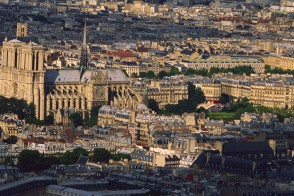
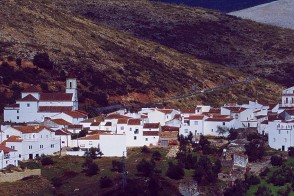
The curricula in the modem foreign languages are designed to develop ability in understanding, speaking, reading, and writing the language and to impart an appreciation of the civilization and literature of the areas where the language is spoken. For students of all languages offered, study abroad is desirable. Students majoring in French or Spanish are required to participate in an approved program of study abroad. Ohio Wesleyan directs the University of Salamanca program during the Fall Semester (see course listings). Students majoring in French will study in an approved program abroad. Students majoring in German are encouraged to study abroad in one of the approved programs in a German-speaking area. Financial aid is available for the programs in Salamanca, Freiburg, Heidelberg, Munich, and for any approved GLCA study abroad program (see "Off-Campus Study Programs"). The Department strongly recommends that students minoring in a modern foreign language also participate in a foreign-study program. More detailed information is available in the Departmental office and in the Off-Campus Study Office. French Major At least nine semester units above the 111 level. No more than two majors units numbered below 350 may be counted toward the major. Students should normally take 350 or 351 before taking courses numbered 360 and above, at least two in literature. Normally no more than one independent study (490,491) may be applied to the major. German Literature Major A minimum of nine units above the GERM 111 level. Five of them must be literature courses taught in German. Normally no more than two units may be taken as an independent or individually arranged course. German Studies Major A minimum of nine units above the GERM 111 level- 225, 254, and one course chosen from 352, 355, or 356; two additional courses taught in German, one of which must be in literature; the remaining four courses (which may be taken in other departments) to be selected with the advice and approval, before pre-registration, of the faculty in German. Normally no more than two units may be taken as an independent or individually arranged course. Spanish Major At least nine units above the 111 level. No more than two units numbered below 350 may be counted toward the major. At lease five courses must be taken at Ohio Wesleyan. Normally no more than one independent study (490, 491) may be applied to the major. French Minor Six semester units above the 111 level. No more than two units numbered below 350 may be counted toward the minor. Students should normally take 350 before taking courses numbered 360 and above. Normally no more than one independent study (490,491) may be applied to the minor. German Literature Minor A minimum of six units above the GERM 111 level. Three of them must be literature courses taught in German. Normally no more than one unit may be taken as an independent or individually arranged course. German Studies Minor A minimum of six units above the GERM 111 level: 225, 254 and one course chosen from 352, 355, or 356; two additional courses taught in German, one of which must be in literature; and at least one additional course (which may be taken in another department) to be selected with the advice and approval, before pre- registration, of the faculty in German. Normally no more than one unit may be taken as an independent or individually arranged course. Spanish Minor At least 6 semester units above the 111 level. No more than two units numbered below 350 may be counted toward the minor. At least four courses must be taken at Ohio Wesleyan. Normally no more than one independent study (490, 491) may be applied to the minor. No Modem Foreign Language course taken credit/no entry may be applied to a major or minor. 110,111 Beginning French (Staff) An introductory course emphasizing four basic skills: aural comprehension, speaking, reading, and writing. Consideration of the cultural and historic background of the areas where the language is spoken, and reading designed to introduce students to the cultures of the French-speaking world. The aim is to prepare students to speak and comprehend with some facility and to read texts of moderate difficulty. Emphasis is on class participation and active use of the language. F, S.
115 Intensive French (2units;Staff) An intensive alternative to 110-111. The standard of expectation is equivalent to that in 110-111, and the emphases, aims, considerations, and design of reading are the same. This course meets for eight hours per week: six contact hours with the instructor, and two contact hours with the preceptor (student assistant). 225 Intensive Grammar Review (0.5 units; Bellocq, Wiebe) An in-depth review of the major points of French grammar with an emphasis on its application through the development of writing skills. Students use computer programs for building vocabulary and for grammar practice in their own particular areas of study. In-class conversation about selected reading improves oral skills and builds vocabulary - F, S. 226 Intensive Grammar Review (0.5 units; Bellocq, Wiebe) Continuation. F, S. 241 French Language Practicum (0.25 units; Staff) A conversation practicum in which cultural and language topics are used as substance for class programs and projects. Students are required to speak French. Students wanting to satisfy the Modem Foreign Language House requirement should enroll in 241 for the Fall Semester, 242 for Spring Semester. FREN 241 may be repeated once for a total of 0.5 unit, not to be counted toward the major or minor. Prerequisite: FREN 225 or the equivalent. F. 242 French Language Practicum (0.25 units; Staff) Continuation. FREN 242 may be repeated once for a total of 0.5 unit, not to be counted toward the major or minor. S. 254 Composition and Conversation: Topics in French Culture I (0.5 units; Bellocq) Development of listening, speaking, reading, and writing skills in French. Continuing grammar review with readings based on selected topics in contemporary French culture as well as short pieces of literature which illustrate aspects of France and her people. Prerequisite: 225 or 226 or permission of instructor. F. 255 Composition and Conversation: Topics in Francophone Culture (0.5 units; Fete) Development of listening, speaking, reading, and writing skills in French. Continuing review of grammar with readings based on selected topics in the cultures of French- speaking Africa, the Antilles, and Canada. Prerequisite: 225 or 226 or permission of instructor. S. 256 Composition and Conversation: Topics in French Culture II (0.5 units; Bellocq) Continuation of 254. F. 257 Composition and Conversation: Topics in Francophone Culture II (0.5 units; Fete) Continuation of 255. S.
258 The French Spirit: Great Works of French Literature in Translation An exploration of French thought as it is presented in literary works from the Renaissance to the present. Students study works which raise issues about the human condition as perceived by such authors as Montaigne, Racine, Molière, Voltaire, Rousseau, Flaubert, Balzac, Proust, Sartre, Camus, and Duras. The course is designed for students who wish to explore this literature in their own language. No knowledge of French required. May not be counted toward the French major or minor. F 259 Introduction to Themes in Modern Literature and Film in Translation (Bellocq) An exploration of texts and films from French-speaking cultures. Course texts, topics, and films are selected thematically to introduct students to the comparative study of literatures of different traditions. No knowledge of French required. May not be counted toward the French major or minor. S. 300.1 French Language Film: le cinèma de langue française (Bellocq) This course features French films selected from earliest cinematic history to the present time from France and other French speaking regions of the world. Students will explore the interplay of image, story and sound-track in representative film genres and directors. The course also focuses on movements of social identity and critical interpretation which continue to shape both films or fiction and documentary. Prerequisites: French 350 or 351 or permission of the instructor. S. 350 Foundations of French Literature (Wiebe) Introduction to analysis of French literature. Emphasis is on critical reading of and writing about texts selected from major literary works from the French tradition. Students become familiar with the intellectual issues and cultural traditions which have defined French literature and are introduced to and practice a variety of modes of written and oral literary analyses. Texts will be selected from among such authors as Rabelais, Madame de Lafayette, Pascal, Voltaire, Flaubert, Sartre, and Duras. Normally 350 is prerequisite for all courses numbered 360 and above. Prerequisite: 254 or 255 or permission of instructor. F. 351 Introduction to French Literature (Wiebe) Introduction to the major trends in French literature from the Middle Ages to the present. Reading and analysis of works by such authors as Montaigne, Racine, Madame de Sevigne, Moliere, Voltaire, Rousseau, Stendhal, Zola, Proust, Camus, and de Beauvoir. Normally prerequisite for courses numbered 360 and above. Prerequisite: one course from 254/256, 255/257, or 350 or permission of instructor. S.
354 Phonetics (Fete) Systematic study of the French sound system with correction of pronunciation. Prerequisite: 350 or permission of instructor. F.
364 The Classical Heritage (Staff) Selected works from the Middle Ages to the present which exhibit concern for form, restraint, and precision in both concept and expression. Special emphasis is given to authors of the 17th and 18th Century "classical period" such as Corneille, Moliere, Racine, Lafayette, Sevigne, Voltaire, and Diderot. However, the course also treats Medieval, Renaissance, 19th and 20th century authors whose style and focus mark them as conforming to the classical tradition. Prerequisite: 350 or 351 or permission of instructor. S.
365 The Rebellious Spirit (Staff) In revolt, complaint, satire, cynicism, and exuberance, French letters bear witness to a tradition of counterpoint to what is perceived as an official point of view. This course focuses on literary expression from the Middle Ages to the present with particular emphasis on such authors as Villon, Labe, Rousseau, Lautreamont, Cehne, and Vian. Prerequisite: 350 or 351 or permission of instructor. S.
371 Topics in Prose of the Modern Period (Wiebe) This course addresses the development of prose fiction in French literature during the nineteenth and twentieth centuries. Masterpieces of the French novel and stories from such authors such as Balzac, Flaubert, Zola, Proust, Gide, Camus and Duras will serve as focus of the course with some attention to literary essays and popular fiction of the same period and the traditions that informed them. Prerequisite: 350 or 351 or permission of the instructor. F. 372 The Dramatic Traditions of the Modern Period (Fete) The major plays of the 19th and 20th centuries. Representative authors such as Hugo, Musset, Sartre, Camus, Ionesco, Genet, Beckett, Duras, and Sarraute. Prerequisite: 350 or 351 or permission of instructor. F.
378 French Civilization (Staff) An integrated study of the civilization of France. Special attention is given to political development, historical trends, and the evolution of arts, literature, and the sciences. Readings and discussion focus on such topics as regionalism, centralization, the rise and fall of the monarchy, intellectual history, architecture, and art and literature as a reflection of contemporary society. Prerequisite: 350 or 351 or permission of instructor.
379 Civilization of the Francophone World (Fete) An integrated study of the civilizations and language of French-speaking areas outside metropolitan France, including North and Sub-Saharan Africa, the Antilles, and Canada. Special attention is given to the evaluation of art, literature, and the oral tradition and the political developments (including colonialism and its aftermath) reflected in selected texts. From readings and discussion emerge such themes as written and popular language, dilemmas posed by modernization and official culture, and struggles for black, Moslem, Caribbean and Quebecois identity, authenticity, cultural recognition, and independence. Prerequisite: 350 or 351 or permission of instructor. S
382 Romance Linguistics (González-Pérez) A discussion of the nature of language, the science of linguistics, the production of sounds, the nature of grammatical systems, the evolution of language, the Indo- European family of languages the Italic sub-grouping, Latin and the Romance languages with special attention given to the evolution of French, Spanish, and Italian. Students are expected to learn general principles of language change and to apply them to specific problems. S. 490 Independent Study (Staff) Guided research on a topic in French. Advance consultation with the supervising faculty member is required before pre-registration. F, S. 491 Directed Readings (Staff) A reading program in French. Advance consultation with the supervising faculty member is required before pre-registration. F, S.
499 Seminar: Special Topics in French (Staff) Seminar on topics of interest to advanced French students. Prerequisite: one course numbered 360 or above, not including 382, or permission of instructor. S. 110, 111 Beginning German (Kremling, Wolber) An introductory course emphasizing four basic skills: listening, speaking, reading, and writing. Consideration of the cultural and historic background of the areas where the language is spoken, and readings designed to introduce students to German culture and literature. The aim is to prepare students to speak and comprehend with some facility and to read texts of moderate difficulty. Emphasis is on class participation and active use of the language. F, S. 225 Continuing German (Kremling, Wolber) An intermediate course emphasizing an intensive review of Beginning German. Conversational practice, vocabulary building, practice in writing sample compositions. Readings and discussion of selected prose and poetry to prepare the student to read German literature and contemporary magazines and newspapers. Prerequisite: 111. F, S. 254 Conversation-Composition (Grothe, Kremling) Extensive and intensive practice in speech patterns and idioms used in the German language. Frequent themes on various topics to develop facility in written German. Prerequisite: 225. F, S. 300.1 Landmark Films of the German Language (Kremling) This advanced German course investigates the artistic qualities as well as the cultural and historical contexts of some of the noted movies made in Germany from the 1930s to the present. The films, shown on video or DVD, will usually have English subtitles, but course lectures and required papers normally will be in German. Students will screen several films from: the Golden Age of German Cinema (1919-1931), films made during and shortly after WWII, the German Democratic Republic (East Germany), the New German Cinema (1965-1985), and those made in the last 20 years. Included are such titles as M, Die Lengende von Paul und Paula, The Marriage of Maria Braun, Run Lola Run, Mostly Martha, Nowhere in Africa, and The Lives of Others. Prerequisite: German 254 or consent of instructor.
352 German for Business and Science (Wolber) Further development of the acquired communicative skills with focus on their practical application in commerce and the sciences. Emphasis on comprehension and analysis of materials taken from recent German-language publications. Prerequisite: 254 or permission of the instructor.
355 Advanced Reading in Nonfiction (Wolber) Reading of texts representative of present-day German nonfiction. Each student has the opportunity to read materials in his or her major field of interest. Especially recommended for students anticipating graduate study and research. Prerequisite 254. 356 History of German Civilization (Kremling, Wolber)
Survey of German culture and civilization up to the present. Emphasis is on comprehension of lectures and discussions conducted in German. Reading of German and English texts supplement the lectures. Prerequisite: 254. S.
361 The German Novella (Kremling)
Reading and interpreting novellas by masters of German literature of the 19th and 20th centuries. Prerequisite 254. F.
363 The Age of Goethe (Wolber) The more important prose and poetry of Goethe and some of his contemporaries. Intensive reading from Goethe's lyrics and ballads and of plays and prose writing representative of the classical period. Prerequisite: 254.
365 20th Century German Literature (Kremling) The main currents of German thought and literature since the turn of the century. Reading and interpreting prose and poetry representative of the intellectual and social history of the German language area in the 20th Century. Prerequisite: 254. F. 490 Independent Study Guided research on a topic in German. Advance consultation with the supervising faculty member is required before pre-registration. The Chairperson of the Department reviews and approves proposals before the beginning of the project. F, S. 491 Directed Reading A reading program in German. Advance consultation with the supervising faculty member is-required before pre-registration. The Chairperson of the Department reviews and approves proposals before the beginning of the project. F, S. 110,111 Beginning Italian (Mancini) An introductory course emphasizing basic skills: aural comprehension, speaking, reading and writing with consideration of the cultural and historic background of the areas where the language is spoken. Readings designed to introduce students to Italian culture and literature are included. The aim is to prepare students to speak and comprehend with some facility and to read texts of moderate difficulty. Emphasis is on class participation and active use of the language. F, S. 225 Continuing Italian (Mancini) This course reinforces the four basic skills: aural comprehension, speaking, reading, and writing. There will be rammar review, vocabulary building, and a focus on certain structures to strengthen the students' ability and desire to use the oral and written language. There will be readings of various kinds and films in Italian added to supplement the text. Students will continue to explore Italian culture, present and past, through a variety of media. F. 110,111 Beginning Japanese (Kawabe) An introductory course focusing on all language skills: speaking, listening, reading and writing through a variety of class activities on everyday situations. Particular emphasis will be placed on oral communication. Both hiragana and katakana are learned at the early stage, and the first one hundred kanji are introduced and practiced. Students will gain appropriate cultural knowledge as a part of essential language skills. Class participation and daily study is a key to achieve success in this course. F.S. 225 Continuing Japanese (Kawabe) This course is a sequential course to Japanese 111. It further develops basic grammatical knowledge necessary to the survival situations, emphasizing functional skills needed for everyday communication, both spoken and written languages. There will be cultural learning using printed materials and online information. Technological skills such as learning to type in Japanese and utilizing practical software will be part of the course work. Prerequisite: 111 or equivalent. F. 110,111 Introduction to Russian (Ross) Introductory courses stressing four basic skills: reading, writing, listening, and speaking. The Cyrillic alphabet, correct pronunciation, and introductory grammar are covered. Through an emphasis on active use of the language, students learn the practical application of Russian in day-to-day situations. Different aspects of Russian culture are also discussed. A variety of media including cassette tapes, videos, CD-ROMs, and the World Wide Web are used in the process of learning the language. F, S.
225 Continuing Russian (Ross) This continuation of Beginning Russian further develops the four sills: reading writing listening, and speaking. While there is some grammar review, the course expands upon the basics of Russian and broadens the students' active use of the language. As the students' use of the language grows, more communicative activities are added. Extra readings from a number of sources supplement the textbook, and different aspects of Russian culture are discussed. A variety of media including cassette tapes, videos, CD-ROMs, and the World Wide Web are used in the process of learning the language. F. 109 111 Beginning Spanish (Staff) An introductory course emphasizing four basic skills: aural comprehension, speaking, reading, and writing. Consideration of the cultural and historic background of the areas where the language is spoken, and reading designed to introduce students to Spanish and Latin American cultures and literatures. The aim is to prepare students to speak and comprehend with some facility and to read texts of moderate difficulty. Emphasis is on class participation and active use of the language. F, S.
115 Intensive Spanish (2units;Staff) An intensive alternative to 110-111. The standard of expectation is equivalent to that in 110-111, and the emphases, aims, considerations, and design of reading are the same. This course meets for eight hours per week: six contact hours with the instructor, and two contact hours with the preceptor (student assistant). 225 Continuing Spanish: Intensive Review (Arribas, Gonzalez-Perez, Rojas) An intermediate course with intensive review of pronunciation and the fundamental structures of grammar. Conversational practice, vocabulary building, practice in writing of compositions. Reading and discussions of selected works from Spanish and Latin American literatures. Designed for students who test in at this level or who have satisfied the language requirement but who would like to continue to increase their fluency in Spanish. Prerequisite: 111 or equivalent. F, S. 241 Spanish Language Practicum (0.25units;González-Pérez)
A conversation practicum in which cultural and language topics are used as substance for class programs and projects. Students are required to speak Spanish. Students wanting to satisfy the Modern Foreign Language House requirement should enroll in 241 for the Fall Semester, 242 for Spring Semester. SPAN 241 may be repeated once for a total of one-half unit, not to be counted toward the major or minor. Prerequisite: SPAN 225 or the equivalent. F. 242 Spanish Language Practicum (0.25 units; González-Pérez) SPAN 242 may be repeated once for a total of 0.5 unit, not to be counted toward the major or minor. Continuation. S. 254 Conversation-Composition: Topics in Spanish Culture (Arribas, Harper) Intensive vocabulary building, development of skills in listening, reading, writing, and conversation. This course stresses preparation of students to express their ideas clearly and concisely in Spanish. Compositions and conversation are based on selected topics in the culture and literature of Spain. Prerequisite: 225 or permission of instructor. F, S. 255 Conversation-Composition: Topics in the Culture of Latin America (Rojas) This class features intensive vocabulary building, development of skills in listening, reading, writing and conversation through topics which treat the cultures and literatures of Spanish America and of Hispanics in the U.S. This course stresses preparation of students to express their ideas clearly and concisely in Spanish, both in writing and orally. 300.3 The Avant-Garde in Spain (Kent)Spain has played a major role in various avant-garde movements. While testing the limits of their respective fields, twentieth-century Spanish writers, artists, film directors and architects have frequently invented the languages through which the modern age has expressed, seen, entertained and housed itself. In this interdisciplinary course, students will have an opportunity to study and discuss the relationship between the artistic strategies of such artists as Picasso, Miró, Dalí and Tapies and the literary inventions of Salinas, Guillén, Cernuda and Lorca. Attention will also be given to the seminal influences of the Spanish architects Gaudí, Sert and Calatrava and the film directors Buñuel and Martzín Patino. F. 350 Introduction to Literature (Kent) An intermediate course in Spanish designed to prepare students for advanced literature courses. Through a careful study of selected Spanish and Latin American works, students will learn to approach literature as artistic and cultural expression. Special attention will be given to the writing of critical analyses and research papers. Prerequisite: 254 or 255. S.
351 Introduction to Spanish Literature (Harper) Critical study of the fundamental aspects of life and thought in Spain. Special attention is given to the development of major themes, traditions and stylistic elements in major prose and dramatic works. Prerequisite: 254, 255, or 350 or permission of instructor. S.
352 Introduction to Latin American Literature (Rojas) The fundamental objective of this course is to study the development of the literary genres (theatre, poetry, narrative fiction and non-fiction) as they interrelate with the major historical, cultural and political events in Spanish America. We will read work from authors such as José Martí, Rubén Darío, Horacio Quiroga, César Vallejo, Luisa Valenzuela, Vicente Huidobro, Jorge Luis Borges, Pablo Neruda, Octavio Paz, Isabel Allende and Juan Rulfo, among others. The extensive use of cultural materials including art, films, pictures and music will aid in the comprehension of the readings. F.
355 Masterpieces of Hispanic Literature in Translation (Harper) As Foucault observes, relations of power and resistance, of dominance and struggle pervade all types of human interaction. This course will explore the diverse representations of power--the plight of the author or artist in a heavily censored society, power and gender, historical and literary constructions of power relations, and more--in selected novels, plays, and short stories of the Franco and post-Franco era of Spain. Works to be studied include, but are not limited to The Back Room, by Carmen Martín Gaite; Love Letters to Stalin, by Juan Mayorga; School of the Sun by Ana María Matute; The Time of the Doves, by Mercé Rodoreda; The Basement Window, by Antonio Buero Vallejo; A Love Too Beautiful, by Manuel Martínez Mediero; The Inkwell, by Carlos Muñiz; and El Sur Bene, by Adelaida García Morales. There will also be a Spanish film with English subtitles. No knowledge of Spanish is required. May not be counted toward the Spanish major or minor.
360 Twentieth and Twenty-First Centuries Mexican Literature and Popular Cultures (Rojas) This course explores the (inter)relationship between Mexican Literature and Popular Cultures in the Twentieth Century in order to give the student a better understanding of the actual and crucial role of Latin American literature as a subject of study. The course begins with the Mexican Revolution in literature, popular culture, and art (narrative, corridos, films, popular art--Posada), then moves forward to post-revolutionary and avant garde narrative and poetry (muralismo, with authors such as Octavio Paz, Carlos Fuentes, Juan Rulfo), continues with the student protest during the second half of the century (Tlatelolco 68; Elena Poniatowska, José Emilio Pacheco) when the literary group of writers known as los escritores de la onda (José Agustín, Luis Arturo Ramos) caught the attention of a younger generation of readers. The course will end with a study of contemporary writers (Alberto Blanco, Coral Bracho, Eduardo Parra) and reveal how their works represent Mexican popular cultures, social movements like Neozapatism and compromised literature at the end of the twentieth century and beginning of the twenty first. Prerequisite: 254, 255 or permission of instructor.
361 Spanish Drama and Poetry (Harper) A critical study of contemporary Spanish drama and its representation in film. Special attention will be paid to representative works from 1960 to the present, including the plays of Antonio Buero Vallejo, Alfonso Sastre, Paloma Pedrero, José Luís Alonso de Santos, Concha Romero, Fernando Arrabal, and others. Film will be used to complement themes and explore the transformation of literary text to film. Prerequisite: one course numbered 300 or above, or permission of instructor. S. 362 The Poetics of Latin American Literature: Short Story and Poetry (Rojas)
This course examines Latin America's literature of the XX and XXI centuries. Special attention will be paid to both narrative (short story) and poetry genres, as well as to mythic, artistic, historical and social-political aspects of Latin America. The extensive use of cultural materials including art, films, pictures and music will aid in the comprehension and analysis of the readings. Prerequisite: one course numbered 300 or above, or permission of instructor. Prerequisite: 350, 351, 352 or permission of instructor. S.
363 Spain in the Twentieth Century (Harper) Critical study of some of the most significant Spanish writing since 1900. The course examines some of the fundamental aspects of thought in Spain: the land and its sense of history, the preoccupation with death, the myths of Don Quijote and Don Juan, the arts in a heavily censored state, and the role and philosophical perspective of Spanish intellectuals of the 20th Century in major works by authors like Unamuno, Machado, Maria Ortega, Lorca, Goytisolo, Cela, Matute, Buero Vallejo, and Sastre. Prerequisite: 350, 351, or 352 or permission of instructor. F.
364 The Latin American Novel Within its Revolutions, Cultures and Social Changes (Rojas) In this class we'll study the main narrative works of Spanish America from the end of the nineteenth century to the establishment of the "post-boom" at the end of the twentieth century. We will cover the main literary movements such as indigenismo, criollismo, regionalismo, vanguardia y pos-vanguardia. We will read novels from authors such as Mariano Azuela, Carlos Fuentes, Alejo Carpentier, Julio Cortázar, Gabriel García Márquez, Miguel Angel Asturias, Elena Garro and Isabel Allende, among others. The extensive use of cultural materials including art, films, pictures and music will aid in the comprhension of the readings. Prerequisite: 350, 351 or 352 or permission of instructor. Suggest one course above 352. S.
365 Cervantes and the Quijote (Arribas) Intensive study of the major episodes of the Quijote and other selected works of Cervantes. Prerequisite: 350, 351, or 352 or permission of instructor. F.
367 The Short Story, Short Prose Fiction and Non-Fiction (Harper) Major developments in the short prose of Spanish literature. Includes the fantastic legends of the nineteenth century and the major tendencies of contemporary prose. This course explores the writings of such authors as Becquer, Ayala, Martin Gaite, Unamuno, Valle Inclán, Matute, Cela, Montero, Tusquets, Merino, Puértolas, Molina Foix, and Delibes. Prerereq: one course 300 or above or consent. S.
368 Directions in Spanish Film and Literature (Harper) An intensive study of the major developments in Spanish cinema with emphasis on films produced in the last two decades, including those of Erice, Saura, Almodóvar, Amenábar, Fernán Gómez, and Cuerda. Contemporary representative literary selections will emphasize prose and drama that illustrate, among others, detective literature, the modern fantastic, synchronicity, and feminist perspectives. Authors to be studied include Mayorga, Pedrero, Montero, Buero, Vallejo, Merino, and Muñoz Molina. Prerequisite: one course 300 or above or permission of instructor. S.
369 Masterworks of the Golden Age of Spain (Arribas)
Interdisciplinary study of the literature and culture os Spain's Renaissance and Baroque centuries, including such major figures as Garcilaso de la Vega, Cervantes, Quevedo, Lope de Vega, Teresa de Avila, Tirso de Molina, María de Zayas, El Greco and Valazquez. Emphasis will be given to the character of Don Juan. Prerequisite: Spanish 350, 351 or 352, or
consent. S.
381 Advanced Spanish Grammar (González-Pérez) A course designed to discover, analyze, and correct the grammatical errors most frequently made by non-native speakers of Spanish, to reinforce awareness of the system of agreement, to refine use of the tenses, to encourage and generally to increase the level of linguistic sophistication in the use of Spanish. While much of the focus will be on continued mastery of the most difficult points of Spanish grammar, the course will also strive to present a novel perspective on grammar as a communicative tool, not as a monolithic set of rules to be memorized. Students will be expected to make frequent contributions, in Spanish, to all in-class activities. Coursework will include programmed exercises, analysis of expository and literary texts, and translation from English to Spanish. Prereq: 350 or above. S.
382 Romance Linguistics (González-Pérez) Discussion of the nature of language, the science of linguistics, the production of sounds,and the nature of grammatical systems, the evolution of language, the Indo-European family of languages, the Italic sub-grouping, Latin, and the Romance languages with special attention given to the evolution of Spanish, French, and Italian. Students are expected to learn general principles of language change and to apply them to specific problems. Also listed as FREN 382. S. 490 Independent Study (Staff) Guided research, with tangible results, on a topic in Spanish. Advance consultation with the supervising faculty member is required before pre-registration. Proposals must be reviewed and approved by the Chairperson of the Department before the beginning of the project. F, S. 491 Directed Readings (Staff) A reading program in Spanish. Advance consultation with the supervising faculty member is required before pre-registration. Proposals must be reviewed and approved by the Chair Department before the beginning of the project. F, S.
499 Seminar (Staff) Seminar on topics of interest to advanced Spanish students. Prerequisite: one course numbered 360 or above, not including 382, or permission of instructor. S. Go to the Salamanca Program's home page for more information. Ohio Wesleyan is affiliated with the University of Salamanca, Spain. Each fall, qualified Ohio Wesleyan students may study in Salamanca and receive credit in Spanish and History through Ohio Wesleyan. Up to three (3) course credits from Salamanca may be counted toward the Spanish major. Students interested in this program should contact Professor Julián Arribas of the Modern Foreign Languages Department. The course descriptions for the Fall semester are as follows: 300.5 Topics in Latin-American Narrative (María Ángeles Perez López) Intensive review of the Latin-American narrative, the course will follow a selection of works of the most renowned writers of the twentieth century. Compositions and class conversations are based on selected topics such as magical realism, neo-fantasy, irony, demystification, and genre, among others. Authors include Horacio Quirogo, Alfredo Byrce Echenique, Isabel Allende, Rosario Ferré, Julio Cortázar, Gabriel Garcia Márquez, Luisa Valenzuela, and Ana Maria Shua. 358 Spanish Grammar (Carlos Cabrera) An intensive review of spoken and written Spanish. This course is designed to facilitate student progress in the literature and history courses in the program and will give special attention to the syntax, vocabulary and idiomatic expressions of Spanish. It is also designed as a continuation of the orientation period study of the Spanish language. 359 The History of Spanish Art (.50 units) (Jesús Jimenez) A short review of Spanish art history, with special attention given to the artistic tradition of Salamanca. This class will also prepare students for field trips to Castilian museums of art, architecture and sculpture. May not be counted toward the major or minor for Spanish or Fine Arts. One half credit will be given toward graduation. 375 The Golden Age in Literature and Culture An interdisciplinary study of the literature of the Spanish Golden Age (1492-1681). Special attention will be given to the masterworks and great authors associated with Salamanca, including the Lazarillo de Tormes, la Celestina, San Juan de la Cruz, Fray Luis de León and Calderón de la Barca. The aim is to provide students with an exposure to the great works and literary figures of Spain during the Renaissance and Baroque periods. Presentation of literature will be made in the context of the art, architecture and music of the period. 377 Contemporary Spanish Literature (Manolo Pérez López) A study of Spanish literature from the Generation of 1898 to the present with special emphasis given to prose works. Readings will include the works of Unamuno, Azorin, Cela and other writers who reflect the contemporary Spanish sensibility. A course designed to complement the course in contemporary Spanish offered in the program by our resident director. 378 Contemporary Spanish History (Santiago González) The major themes and problems of twentieth century Spanish history will be presented in the context of Spanish traditions. Seven classes devoted to a survey of Spanish history with the remaining classes devoted to the Spanish Republic (1931-59), the Franco era (1939-75) and the post-Franco era (1975 to the present). One major text will be used in conjunction with xeroxed articles. May not be counted toward the major or minor. Students may petition the Department of History for recognition of SPAN 378 for history credit. |
||||||||||||||||||||||||||||||||
Copyright
©
Ohio Wesleyan University. All rights reserved. ♦ 61 S. Sandusky St., Delaware, Ohio, 43015 ♦ Phone: 740-368-2000![]() |